
cab XC Q
A 4 or 6 inch label printer that prints with two ribbon colours using two printheads, at up to 150 mm per second and 300 dpi.
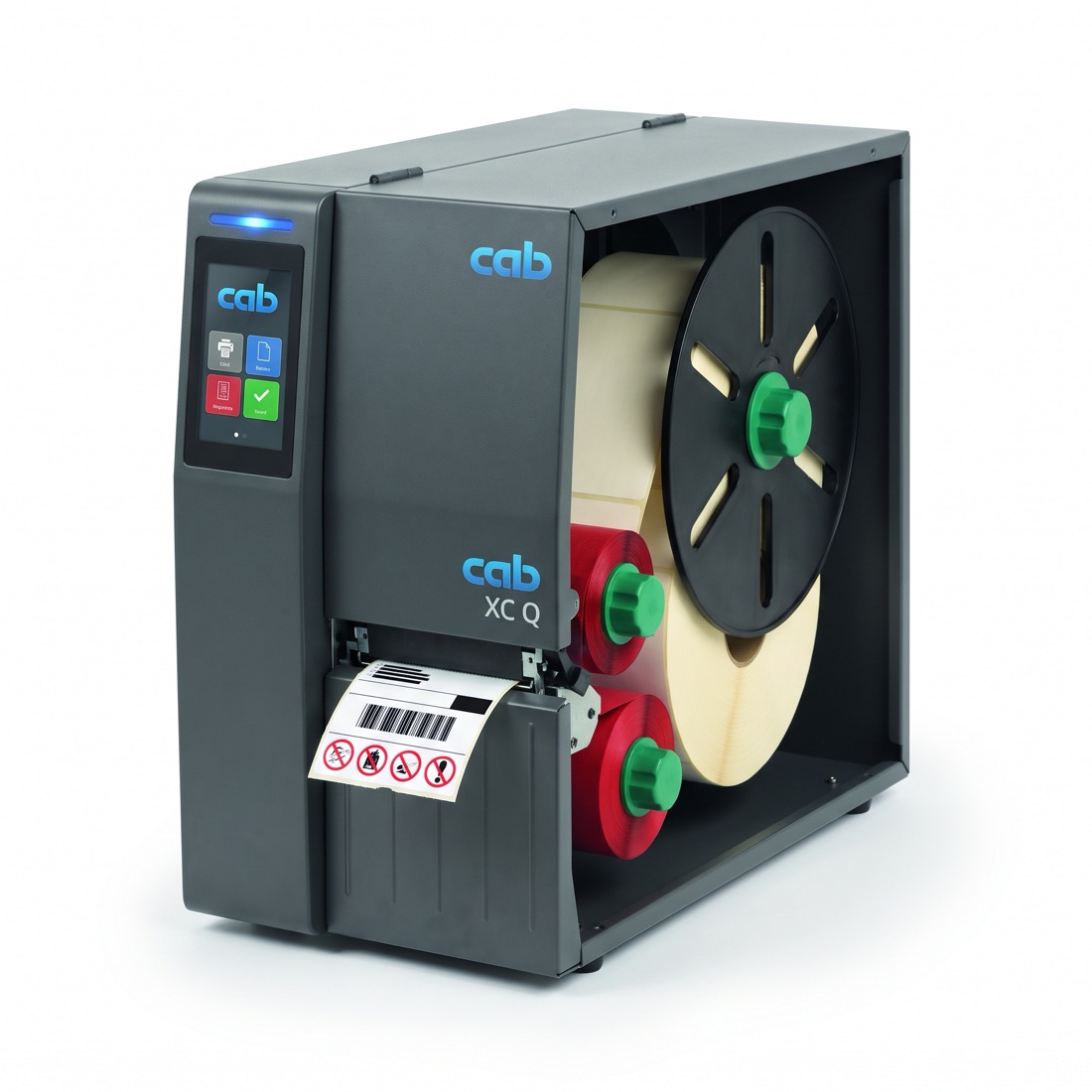
maximum print width, XC Q6.3
maximum print speed
resolution
one for each ribbon colour
What fits the XC Q
Drawn to one scale.
Labels: 20 to 116 mm wide on the XC Q4 and 46 to 176 mm on the XC Q6.3; up to 0.1 mm thick; on rolls up to 300 mm across, on a 76 mm core.
Ribbons: Up to 114 mm wide on the XC Q4 and up to 170 mm on the XC Q6.3, up to 450 m long, on a 25.4 mm core, wound with the colour side outside or inside; one ribbon runs through each printhead, and cab says ribbons should be at least as wide as the liner material.
See , , or start from what the label must survive in the .
Specification
The base model. Options change some of these figures.
Printing
- Methods
- Thermal transfer, with two printheads and two ribbons for two colours
- Resolution
- 300 dpi
- Print width
- Up to 105.7 mm on the XC Q4; up to 162.6 mm on the XC Q6.3
- Print speed
- Up to 150 mm/s
- Print length
- Up to 3,000 mm on the XC Q4; up to 2,000 mm on the XC Q6.3
- Printheads
- Separate heating setting for each printhead; printhead 1 lifted when only printhead 2 is used; automated ribbon saving on printhead 1
- Media sensors
- Transmissive sensor and reflective sensor from below or above, 5 to 60 mm from the locating edge; material passage up to 2 mm
Labels
- Width
- 20 to 116 mm on the XC Q4; 46 to 176 mm on the XC Q6.3
- Height
- From 10 mm
- Roll
- Up to 300 mm outside diameter, on a 76 mm core; wound outside or inside
- Thickness
- Up to 0.1 mm
- Liner
- 24 to 120 mm wide on the XC Q4, 50 to 180 mm on the XC Q6.3; 0.03 to 0.16 mm thick
- Continuous
- 24 to 120 mm wide on the XC Q4, 50 to 180 mm on the XC Q6.3; 0.03 to 0.5 mm thick; cardboard up to 300 g/m2
- Materials
- Paper, cardboard and synthetics (PET, PE, PP, PI, PVC, PU, acrylate, Tyvek) on rolls; textile tape on the XC Q4 only; material guided aligned to the left
Ribbons
- Length
- Up to 450 m
- Width
- Up to 114 mm on the XC Q4; up to 170 mm on the XC Q6.3
- Core
- 25.4 mm
- Roll
- Up to 80 mm outside diameter; colour side outside or inside
Connections
- Standard
- RS232-C, USB 2.0 Hi-Speed for a PC, Ethernet 10/100 Mbit/s with IPv4 and IPv6, static IP or DHCP, IEEE 802.1X, two USB host ports on the control panel and two on the back, SD card slot (SDHC and SDXC, up to 512 GB), USB host 24 V DC for peripherals
- Optional
- Digital I/O interface with 8 inputs and 8 outputs; USB WLAN stick, 2.4 GHz 802.11b/g/n, or with a rod antenna 2.4 GHz and 5 GHz 802.11a/n/ac
- Network protocols
- RawIP (port 9100 by default), LPD/LPR, FTP/FTPS, HTTP/HTTPS, WebDAV, SOAP, SNMP v2, SMTP, PJL, OPC UA and OPC UA DI, VNC, mDNS
Printer languages
- cab JScript and abc Basic Compiler; ZPL II as an option, with the data stream to be tested in advance
Unit
- Display
- 4.3 inch colour touch display, 272 x 480 px
- Memory
- 256 MB RAM, 50 MB flash (IFFS); 800 MHz 32-bit processor
- Size
- XC Q4 248 x 395 x 554 mm; XC Q6.3 358 x 395 x 554 mm, width by height by depth
- Weight
- XC Q4 22 kg; XC Q6.3 24 kg
- Power
- 100 to 240 V AC, 50/60 Hz, PFC; typical operation 100 W, up to 200 W
Environment
- Operating
- 5 to 40 °C; 10 to 85% humidity, non-condensing
- Storage
- 0 to 60 °C; 20 to 85% humidity, non-condensing
- Transport
- −25 to 60 °C; 20 to 85% humidity, non-condensing
Options
Cutters A CSQ 402 or CU400 cutter for the XC Q4 and a CU600 for the XC Q6.3 cut paper, cardboard, textile and synthetic materials up to 120 or 180 mm wide, at up to 200 cuts a minute for the CSQ 402 and 100 for the CU cutters; the CSQ pivots away to change material.
External rewinders ER4/300 (XC Q4) and ER6/300 (XC Q6.3) rewinders wind a web up to 120 or 180 mm wide, outside or inside, on rolls up to 300 mm across, on a 40 mm core or a 76 mm cardboard core with an adapter.
Fanfold guide Brings fanfold labels into position behind the print unit, where a guide and a brake feed them reliably to the print mechanics.
Digital I/O interface Digital I/O interface with 8 inputs and 8 outputs, to IEC/EN 61131-2 types 1 and 3, so that a PLC, a sensor or a hand switch can trigger printing; status and errors are signalled.
USB WLAN stick A USB WLAN stick for 2.4 GHz 802.11b/g/n, or one with a rod antenna for 2.4 GHz and 5 GHz 802.11a/n/ac, in hotspot or infrastructure mode.
Drivers and documents
- From cab: the drivers, firmware and user guide are on cab's page for the XC Q.
- Set up as a fleet: cablabel S3, cabFirmwareUpdater.
- From label software: through cab's driver, see Software licences.
- Calibration: PrinterCal, our own software, sets media sensor, darkness and print position on cab printers.
Printheads and wear parts
Part-number search| Part | cab part number |
|---|---|
| Printhead 4/300 X (XC Q4, 300 dpi; two per printer) | 5987089.001 |
| Printhead 6.3/300 X (XC Q6.3, 300 dpi; two per printer) | 5987097.001 |
| Print roller DR4 (XC Q4, platen roller; two per printer) | 5954180.001 |
| Print roller DR6 (XC Q6.3, platen roller; two per printer) | 5954245.001 |
The numbers are from cab XC Q spare parts list of Edition 10/2025, part no. 9003937. We supply these parts, and compatible ones, under our own article numbers.
What wears, and what shortens its life: 5.5 Printheads and wear parts.
cab's terms of 19 November 2024 give 24 months on the printer and, on the printhead, 24 months or 50 km of printing in thermal transfer or 24 months or 25 km in direct thermal, whichever comes first, with label material approved by cab in advance; wear parts such as the drive roller are not covered for wear.
Successor
The XC Q is current: cab has announced no end of sale.
It replaced the XC 4 and XC 6. Older models and their successors are on 5.6 Discontinued models.
Around the printer
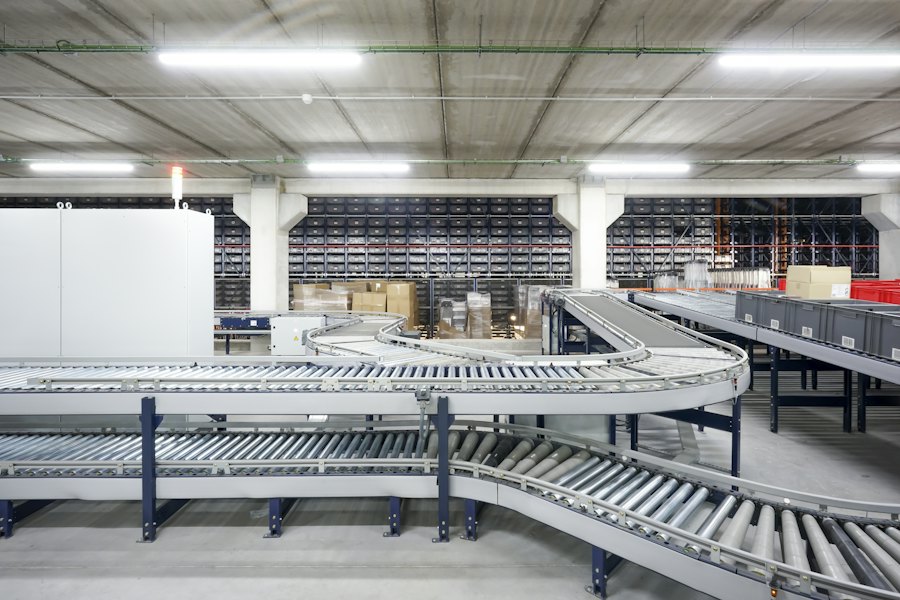
Installation: installed and commissioned by us, see 8.3 Installation. Outside Switzerland, each visit is quoted.
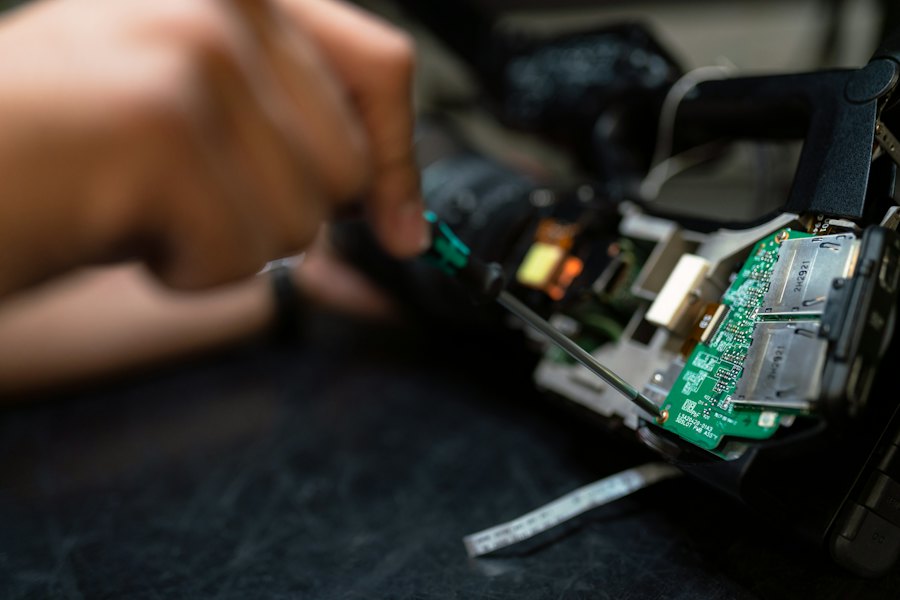
Repair: in our workshop near Zurich, see 8.1 Repair and RMA.
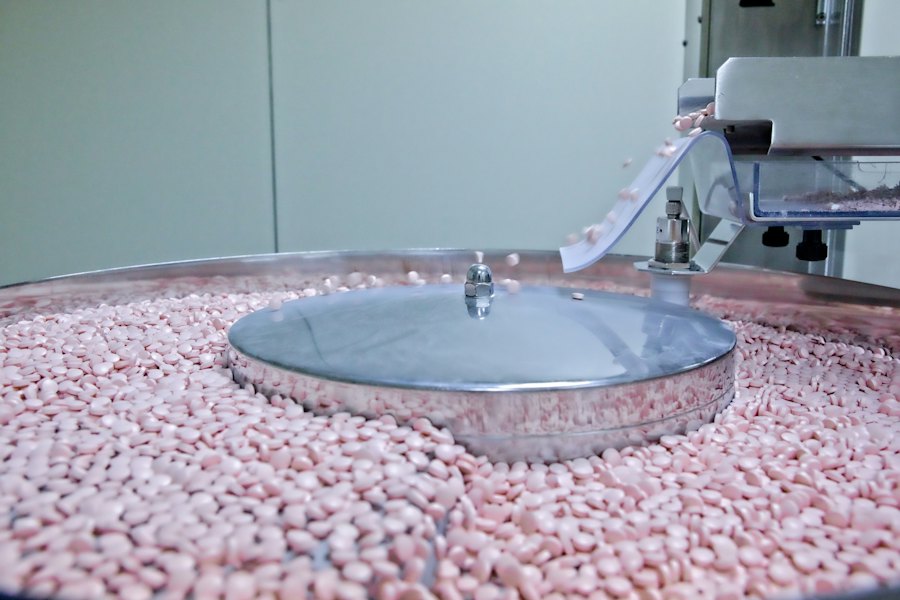
In a GMP plant: IQ and OQ support for cab printers, see 1.4 IQ/OQ/PQ scope.
For the XC Q on its own or with its installation, labels and ribbons, request a quote.
Last checked: 5 November 2026.
Preparing a validation, an inspection or a change to your labels?
The first engagement is free: a half-day review of your current label print chain, ending in a written list of gaps.