
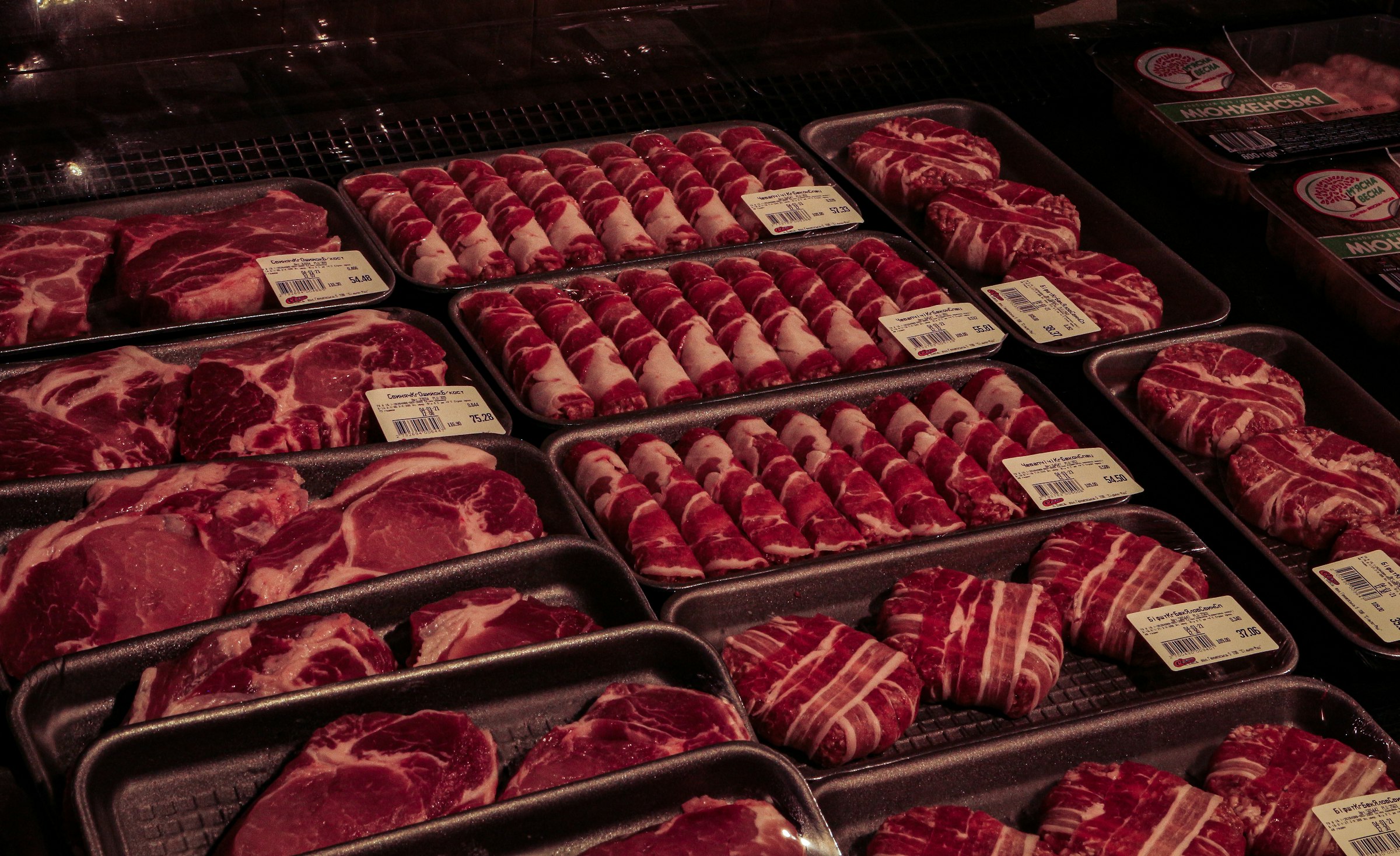
Food information on the label
A prepacked food carries the same core of information in the EU and in Switzerland.
Part of it is printed on the packaging in advance. What changes with the recipe, the batch or the day, such as the date, the lot and often the weight, is printed as the food is packed, and that is the label printer's part.
What the rule asks of a label
In the EU, Regulation (EU) No 1169/2011, consolidated on 1 April 2025, lists twelve mandatory particulars (Article 9):
- the name,
- the ingredients,
- the allergens,
- the quantity of certain ingredients,
- the net quantity,
- the date mark,
- storage conditions,
- the food business's name and address,
- the origin where Article 26 requires it,
- instructions for use where needed,
- the alcoholic strength above 1.2 % by volume,
- and the nutrition declaration.
The food business under whose name the food is marketed is responsible for them, or the importer when that business is outside the EU (Article 8).
What matters most to the label printer:
- 01An x-height of at least 1.2 mm, or 0.9 mm where the pack's largest surface is under 80 cm² (Article 13).
- 02Under 10 cm², only the name, the allergens, the net quantity and the date are required on the label (Article 16).
- 03Allergens stand out from the other ingredients, by font, style or background colour (Article 21). Annex II lists fourteen, from cereals containing gluten to molluscs.
- 04"Use by" or "best before". Food that is highly perishable from a microbiological point of view carries a "use by" date, on every individual prepacked portion; most other food carries "best before" (Article 24 and Annex X). Frozen meat, meat preparations and unprocessed fishery products also carry "Frozen on" with the day, month and year (Annexes III and X).
- 05The lot, set by the producer, the packer or the first seller in the EU, preceded by the letter "L" unless it is clearly distinguishable from the other details on the label, and always easily visible, clearly legible and indelible. It can be left out when the date gives at least the day and the month, uncoded (Directive 2011/91/EU, Articles 3 to 5).
Example labels, 100 x 70 mm and 40 x 24 mm, on their liner
In Switzerland, the FDHA Ordinance on Food Information (SR 817.022.16), as at 1 July 2025, sets the same x-heights and the same fourteen allergens (Articles 4 and 11), and asks for more than the EU, for example in these four places:
- Every food states its country of production, unless the name or the address makes it evident (Articles 3 and 15).
- "May contain" is required, not voluntary, where cross-contact exceeds or could exceed set limits per kilogram or litre of ready-to-eat food, for most allergens 1 g. The statement follows the list of ingredients directly (Article 11).
- The label is durable (Article 4), where the EU asks for indelible print only "where appropriate".
- A notice on certain animal products. Since 1 July 2025, listed animal products made with methods banned in Switzerland, such as force-feeding for foie gras, carry a set notice. Labels without it may still be made until 30 June 2027 (SR 817.02, Article 36, Annex 2 and Article 95d).
The lot is preceded by "L" unless it is clearly distinguishable (Article 20), and can be left out when a best before, use by, packing or harvest date gives at least the day and the month, uncoded (Article 19). The particulars are given in at least one official language of the Confederation (SR 817.02, Article 36).
Food of animal origin from an approved establishment carries its identification mark, applied before the product leaves the establishment and printable on the label: an oval with the country and the establishment's approval number, and in the EU an abbreviation such as EU (Regulation (EC) No 853/2004, consolidated on 7 May 2026, Annex II, Section I; in Switzerland, SR 817.022.16, Articles 37 and 38).
Food packed in the store at the customer's request, or prepacked for direct sale, is not prepacked food under the Regulation: only the allergens are required EU-wide, and national rules decide the rest (Articles 2 and 44).
In Switzerland, food sold loose needs the same information as prepacked food, though not necessarily in writing (SR 817.02, Article 39).
What that means for a supermarket is on 7.5 Large-scale distribution.
What our label systems do
- Printed from your data. TEKLYNX SENTINEL prints each label from the data SAP or your ERP sends: the name, the ingredients with the allergens emphasised, the net quantity, the date and the lot. A recipe changed in SAP reaches every label that prints after it. See 3.1 SAP label printing.
- Templates that keep the sizes. A template designed in 4.1 TEKLYNX CODESOFT sets the font size of every field, so the text stays at the x-height you chose. Test it with your longest list of ingredients.
- Approval before printing. Each new or changed template is approved before it prints, with an audit trail: 4.4 TEKLYNX LABEL ARCHIVE.
- Weight and price codes for food sold by weight: 7.5 Large-scale distribution. The move to 2D codes is on 1.1.2 GS1 and serialisation.
- On the packing line, labels printed and applied as each pack passes, with a scanner that pushes off a pack whose code does not read: 3.4 Labeling industrial automation.
What stays with you
- The food information itself: the recipe, the allergens, the nutrition declaration and the date your product can carry.
- The national rules of each market, and the languages for each.
- Approving each template and each change before it prints.
Last checked: 28 October 2026.
Preparing a validation, an inspection or a change to your labels?
The first engagement is free: a half-day review of your current label print chain, ending in a written list of gaps.