Numaco Labeling
 
Numaco Labeling
Labelling rule 1 of 5

Hazard labels for chemicals:
GHS and CLP

Last checked: 6 November 2026.Regulation (EC) No 1272/2008

The rule: Regulation (EC) No 1272/2008 on classification, labelling and packaging (CLP), the EU's implementation of the UN Globally Harmonised System (GHS, currently Revision 11, 2025).

It was revised by Regulation (EU) 2024/2865, whose dates were then moved by Regulation (EU) 2025/2439. In Switzerland, the Chemicals Ordinance (ChemO, SR 813.11) applies CLP by reference.

Labelling rule 1 of 5

What a CLP label must carry

  1. 01The supplier's name, address and telephone number
  2. 02The nominal quantity, on packs sold to the general public
  3. 03The product identifiers
  4. 04The hazard pictograms, the signal word, and the hazard and precautionary statements
  5. 05Any supplemental information

All of it in the official language of each country where the product is sold. A label serving several countries carries the same details in every language, which is why multilingual CLP labels get large fast.

Example Chemicals AG, Musterstrasse 1, CH-0000 Example+41 00 000 00 005 LSOLVENT BLEND SX-40Contains: acetone, propan-2-ol. EC 200-662-2DANGERH225 Highly flammable liquid and vapour.H319 Causes serious eye irritation.H336 May cause drowsiness or dizziness.P210 Keep away from heat, hot surfaces, sparks, open flames. No smoking.P305+P351+P338 IF IN EYES: Rinse cautiously with water for several minutes.EUH066 Repeated exposure may cause skin dryness or cracking.12345

Example label, 74 x 105 mm

Size today

74 x 105 mmOver 3 up to 50 litres

Each pictogram covers at least one fifteenth of the label area and never less than 1 cm². Today CLP sets no minimum font size.

What changes, and when

Already applying, since 1 July 2026: rules for fold-out labels, small packaging and refill stations, and the option of a digital label. The physical label stays mandatory. Only the supplemental information may move to a digital label reached through a code, and the label must then say "More hazard information available online".

From 1 January 2028, under the law as it stands today:

Package volumeMinimum letter height (x-height)Pictogram, where possible
Up to 0.5 litres1.2 mm16 x 16 mm
Over 0.5 up to 3 litres1.4 mm16 x 16 mm
Over 3 up to 50 litres1.8 mm23 x 23 mm
Over 50 up to 500 litres2.0 mm32 x 32 mm
Over 500 litres2.0 mm46 x 46 mm

Text black on white, line spacing at least 120 per cent of the font size, one legible sans serif font, and no pictogram smaller than 10 x 10 mm.

Pending, not yet law: the EU's chemicals simplification package, agreed by Parliament and Council negotiators in June 2026, would keep minimum font sizes only for products sold to the general public, at an x-height of 1.2 mm, or 0.9 mm on packs up to 125 ml, and ask only for legible text on other labels. Those rules would apply 18 months after the package enters into force. A product already labelled to the present rules and placed on the market before then would not have to change until 42 months after it enters into force. Parliament adopted the text on 22 October 2026 (T10-0362/2026). The Council's position and publication in the Official Journal are still to come. Until then, plan for 1 January 2028. We will update this page when it is published.

Switzerland: has not adopted the 2024 revision. The federal authorities are drafting a ChemO revision, with consultation expected in late 2026, soon after the EU package is published. They say it will come somewhat later than in the EU, with sufficiently long transition periods.

A Swiss label printed today follows the CLP version ChemO currently refers to.
BS 5609
3months

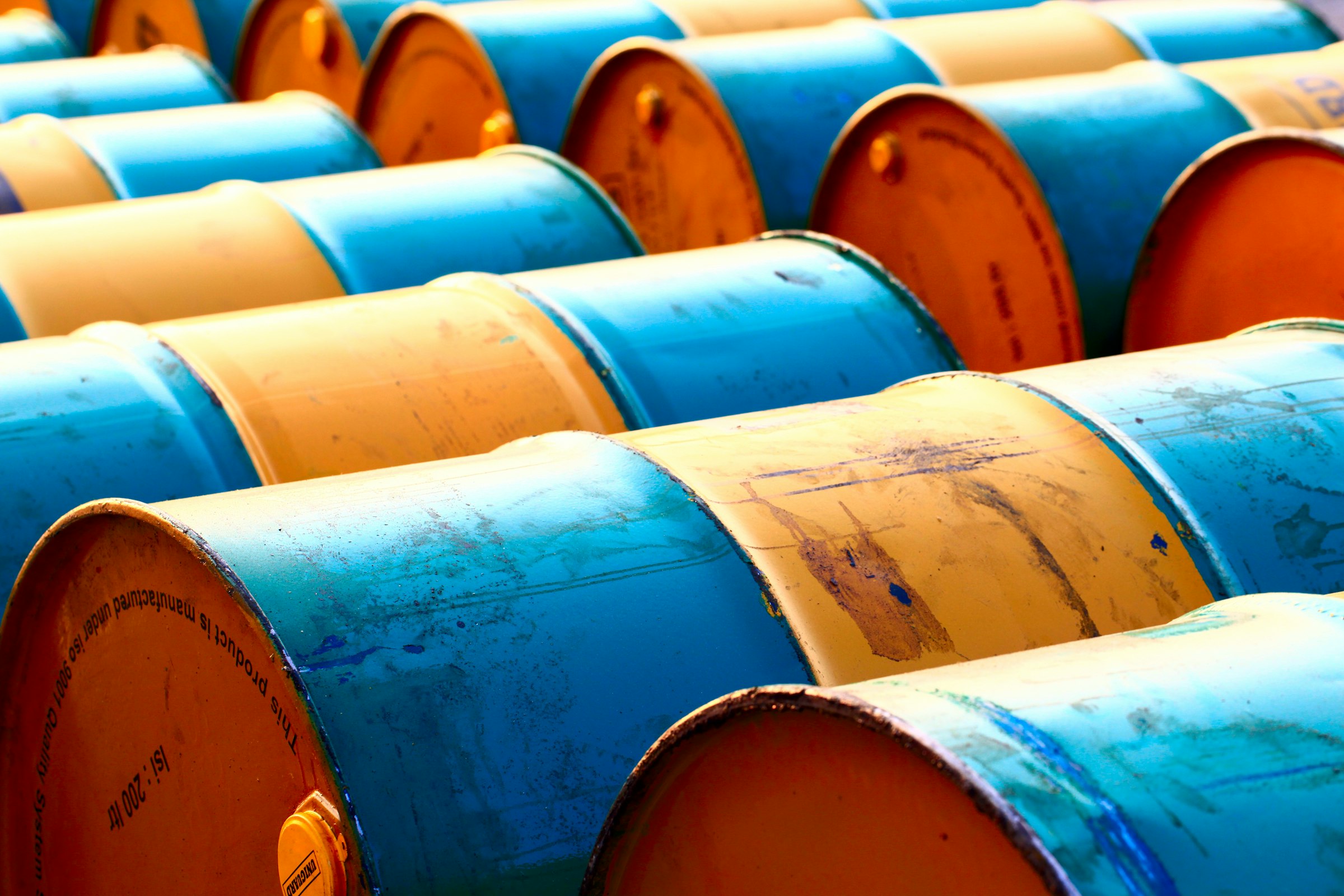
For drums and containers shipped by sea

Dangerous goods shipped by sea under the IMDG Code need labels that stay identifiable after at least three months in seawater. The usual evidence is a label material tested to BS 5609:2024. Section 2 immerses the unprinted face material and adhesive in seawater for three months, and Section 3 tests the printed label with a given ribbon or ink.

Ribbon and label material have to be tested together: a BS 5609 label with the wrong ribbon does not pass.

Numaco

What our label systems do

  • Hold one template per pack size, so letter height and pictogram size follow the volume automatically.
  • Take the hazard data from SAP EHS, where your safety data sheets are already managed, so the label and the safety data sheet say the same thing.
  • Lay out several languages on one label, or switch the language by destination country.
You

What stays with you

  • Classifying the substance or mixture and choosing the hazard and precautionary statements.
  • Deciding which version of the rules your label follows during the transition, and when to switch.
  • The safety data sheet.
Project responsibilities

Last checked: 6 November 2026.

Talk to us

Preparing a validation, an inspection or a change to your labels?

The first engagement is free: a half-day review of your current label print chain, ending in a written list of gaps.