
Labelling for supermarket chains and their distribution centres
A supermarket chain prints labels in two places.
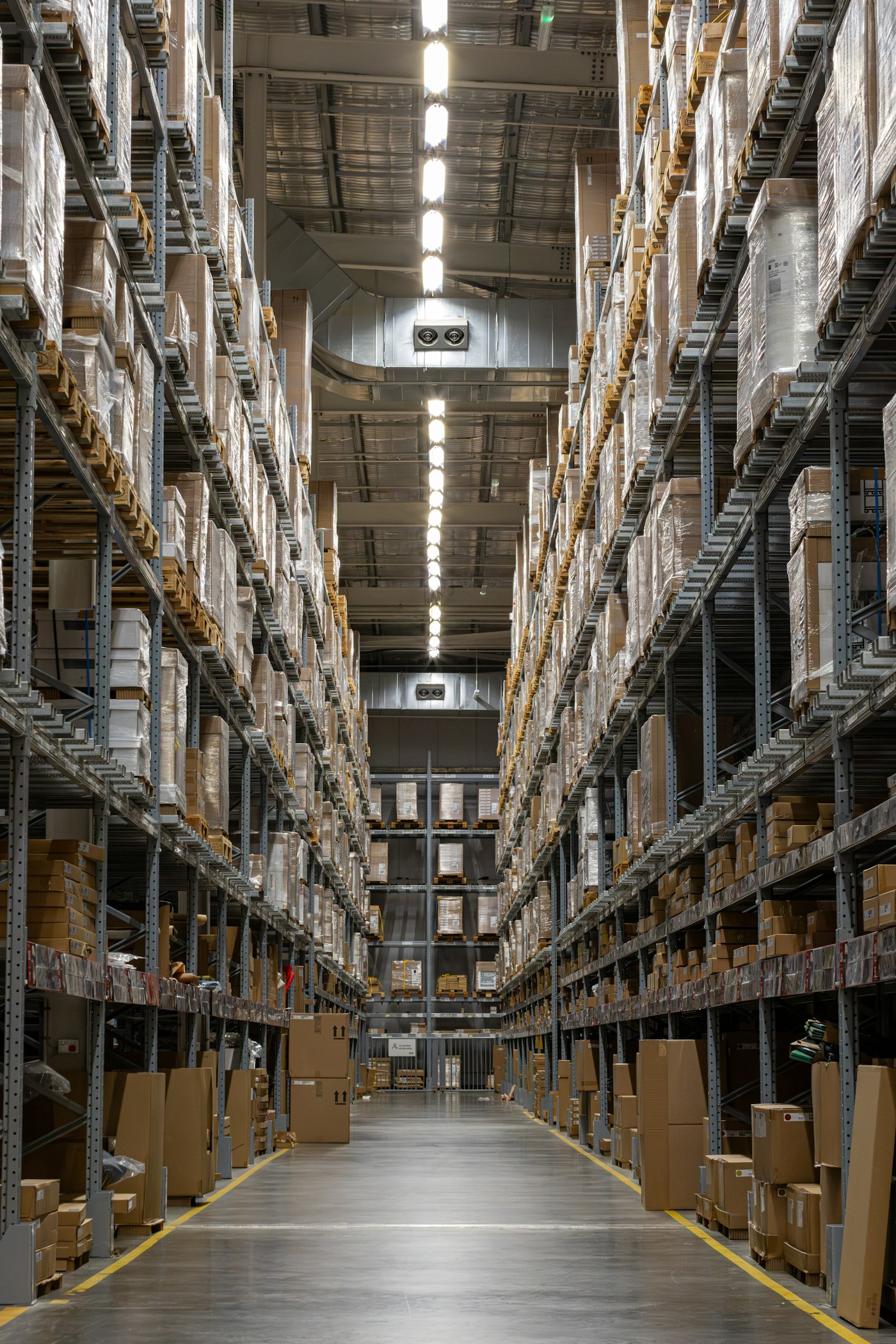
In the distribution centre, every pallet and case gets a logistic label.
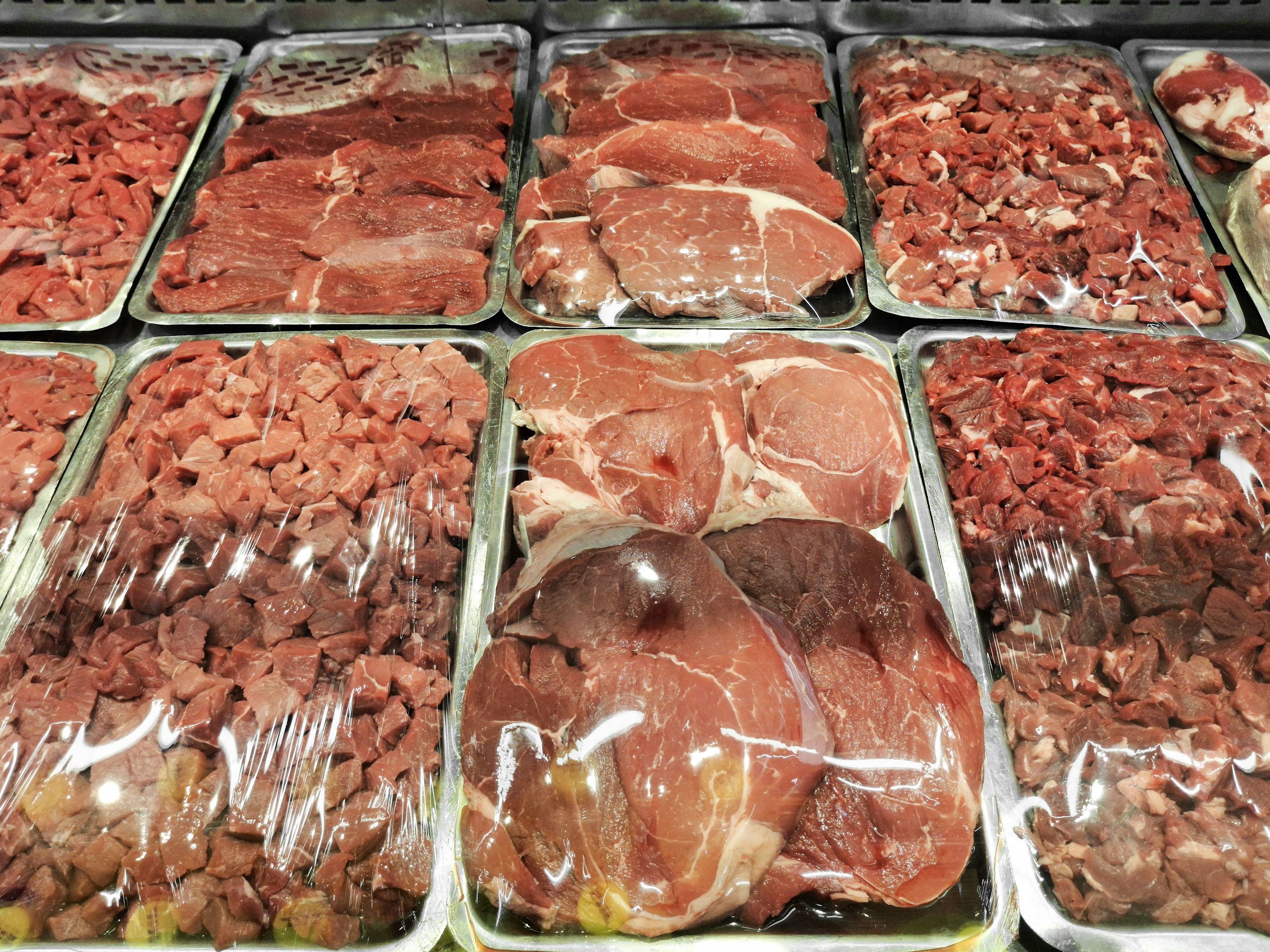
In the store, fresh food is weighed, packed and priced, and one label carries the food information, the weight, the price and the barcode the checkout reads.
The rule: food information
What every food label must carry, in the EU and in Switzerland, and the details that matter to the label printer, are on 1.1.5 Food information.
What a supermarket meets beyond them:
- Food packed in the store at the customer's request, or prepacked for direct sale, is not prepacked food under Regulation (EU) No 1169/2011, consolidated on 1 April 2025: only the allergens are required EU-wide, and national rules decide the rest (Articles 2 and 44). In Switzerland, food sold loose needs the same information as prepacked food, though not necessarily in writing (SR 817.02, Article 39).
The rule: barcodes for weight and price
1.1.2 GS1 and serialisation explains GS1 barcodes, the pallet label and the move to 2D codes at the checkout by end 2027.
For fresh food sold by weight, under the GS1 General Specifications, Release 26.0:
- The established code is an EAN-13 starting with 02 or 20 to 29: a restricted circulation number holding an item number and the weight or the price, structured by each country's GS1 organisation and valid only in that country.
- In Switzerland, GS1 Switzerland has issued no new four-digit standard article numbers for fresh produce sold by weight since 2018, and recommends the GTIN with a 2D code instead.
- With a 2D code, the pack can carry its GTIN with the weight, the price, the use by date and the batch. GS1's own example: (01) GTIN, (3103) 1.015 kg, (17) use by 31 December 2027, (3922) price 16.55, (10) batch ABC123. The checkout can then stop the sale of an expired pack by itself.
- A restricted circulation number cannot go into a GS1 2D code, so moving to 2D means moving weighed products to GTINs. During the transition, the 2D code is printed beside the linear barcode, not instead of it.
- In the distribution centre, a case of variable weight carries a GTIN-14 starting with 9 and its weight, for example in GS1-128.
The price.
A prepacked product sold by weight shows the price to pay and the price per kilogram: Directive 98/6/EC, consolidated on 28 May 2022, Article 3, in the EU, and the Price Indication Ordinance (SR 942.211, as at 1 January 2025), Article 5, in Switzerland.
The label materials
- Direct thermal: no ribbon. The heat-sensitive paper darkens under the printhead, and later under heat and light, so it suits a label that only has to last as long as the fresh food it is on.
- Freezer-grade: two temperatures matter, the coldest surface the label can be applied to, and the range it holds once applied, usually after 24 hours, in Zebra's label specifications. A label for a pack that is already frozen must be rated for that application temperature; one applied before freezing only has to hold at the storage temperature.
- Linerless: labels with no backing paper, so there is no liner to throw away, on printers built for linerless rolls.
- We supply direct thermal, freezer-grade and linerless labels.
- Find them with the , or on : direct thermal, the freezer adhesive and, for labels that touch the food, food contact. For linerless labels, write to [email protected].
The systems
- In the distribution centre: pallet and case labels printed from SAP or your warehouse system by TEKLYNX SENTINEL (3.1 SAP label printing, 3.2 Systems and interfaces), and scanners and mobile computers for goods receipt and picking (3.5 Barcode and data capture).
- In the store: a scale with a built-in label printer weighs the pack, calculates the price from the price per kilogram and prints both prices on the label, with its barcode. The label printers we sell for the distribution centre and the store are Zebra, cab, TSC and Epson, and other brands on request.
- At the checkout and on the shelf: fixed checkout scanners are on 3.5; electronic shelf labels are under Numaco Automation.
What stays with you
- The food information itself, and the national rules for food packed in the store.
- Your GTINs, or the structure your GS1 organisation sets for weight and price codes, and the article and price data in your scales.
- Checking that every checkout reads 2D codes before your labels carry them.
An illustrative example
Illustrative: written to show how the parts fit together. It is not a real project or a real customer, and its figures are not results.
The central fresh food department of a supermarket chain weighs, packs and prices meat and cheese for its stores. Its Zebra printers print each label from the weighed data: the food information, both prices and, beside the EAN-13, a GS1 DataMatrix carrying the use by date, so the checkout can stop the sale of an expired pack.
Packs relabelled in the stores for a wrong date: from about 60 a week to fewer than 5.
Last checked: 28 October 2026.
Start with the free half-day review of your current label print chain: [email protected].