
Toshiba APLEX4
A print and apply label applicator for B-EX4 series printers, at up to 30 labels a minute, for labels from 25 x 25 to 116 x 200 mm.
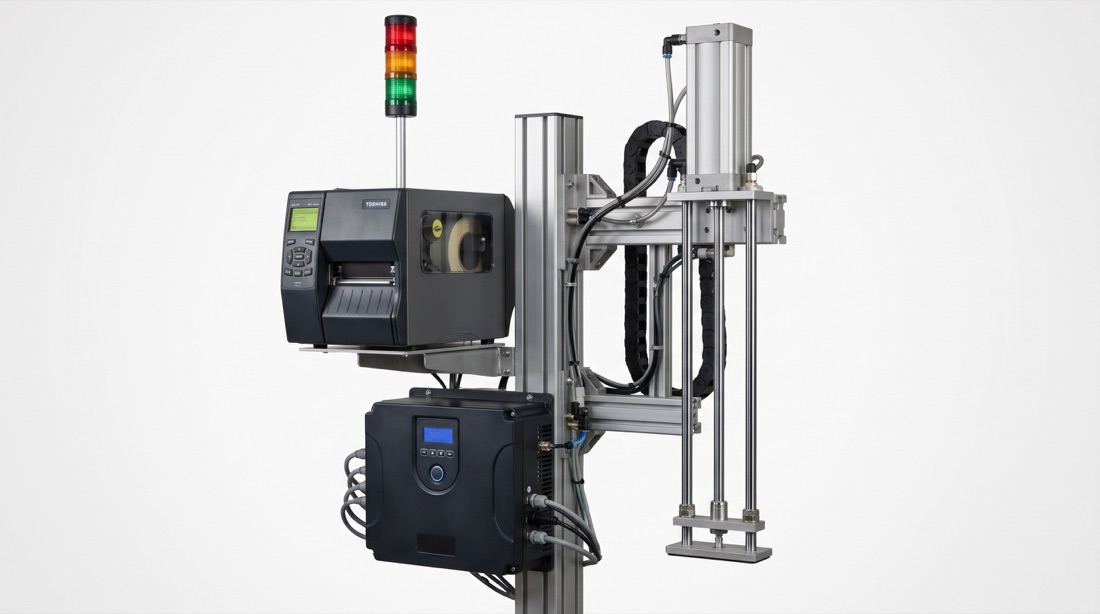
highest application rate
usable piston stroke
maximum product speed when labelling in motion
maximum print width of the printer
What fits the APLEX4
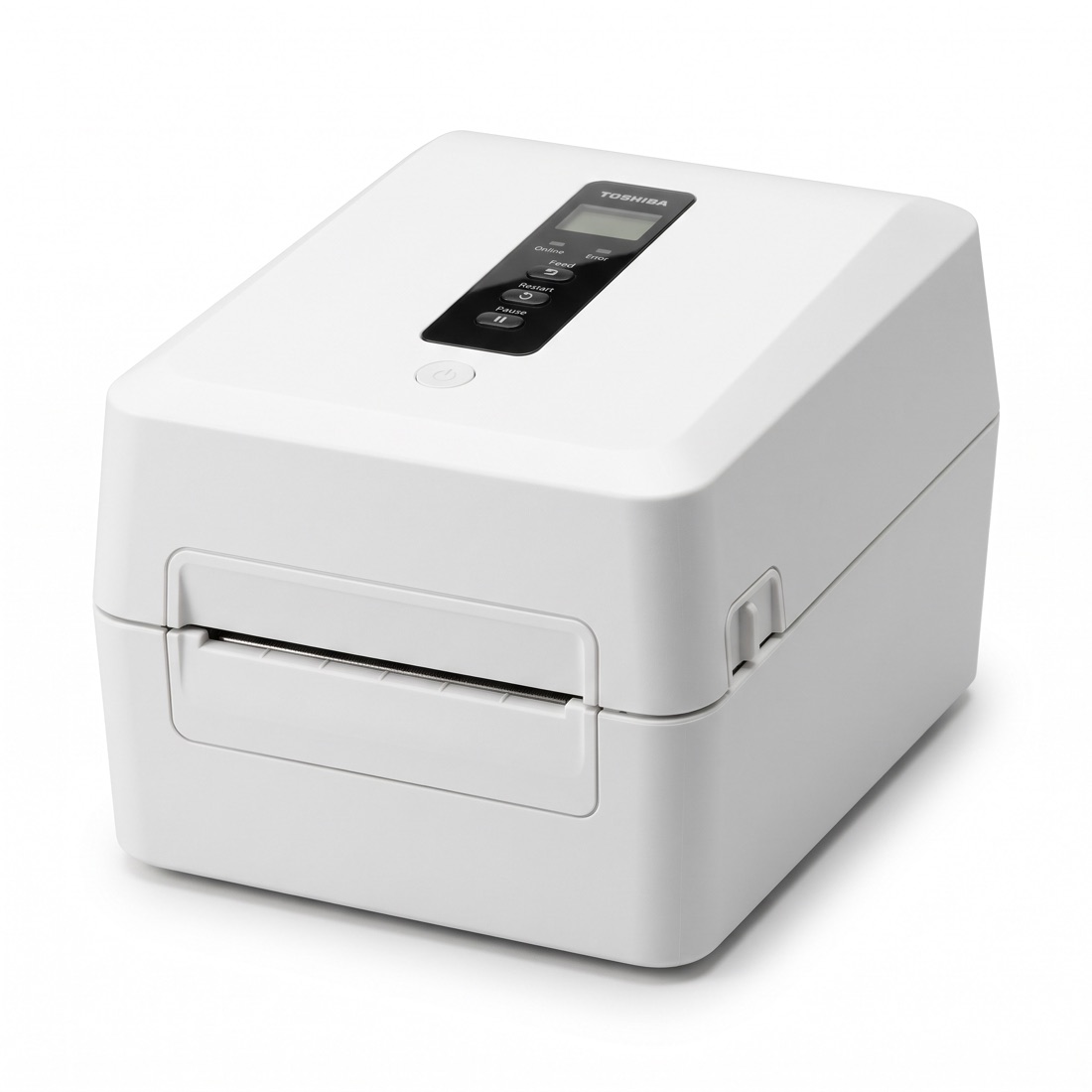
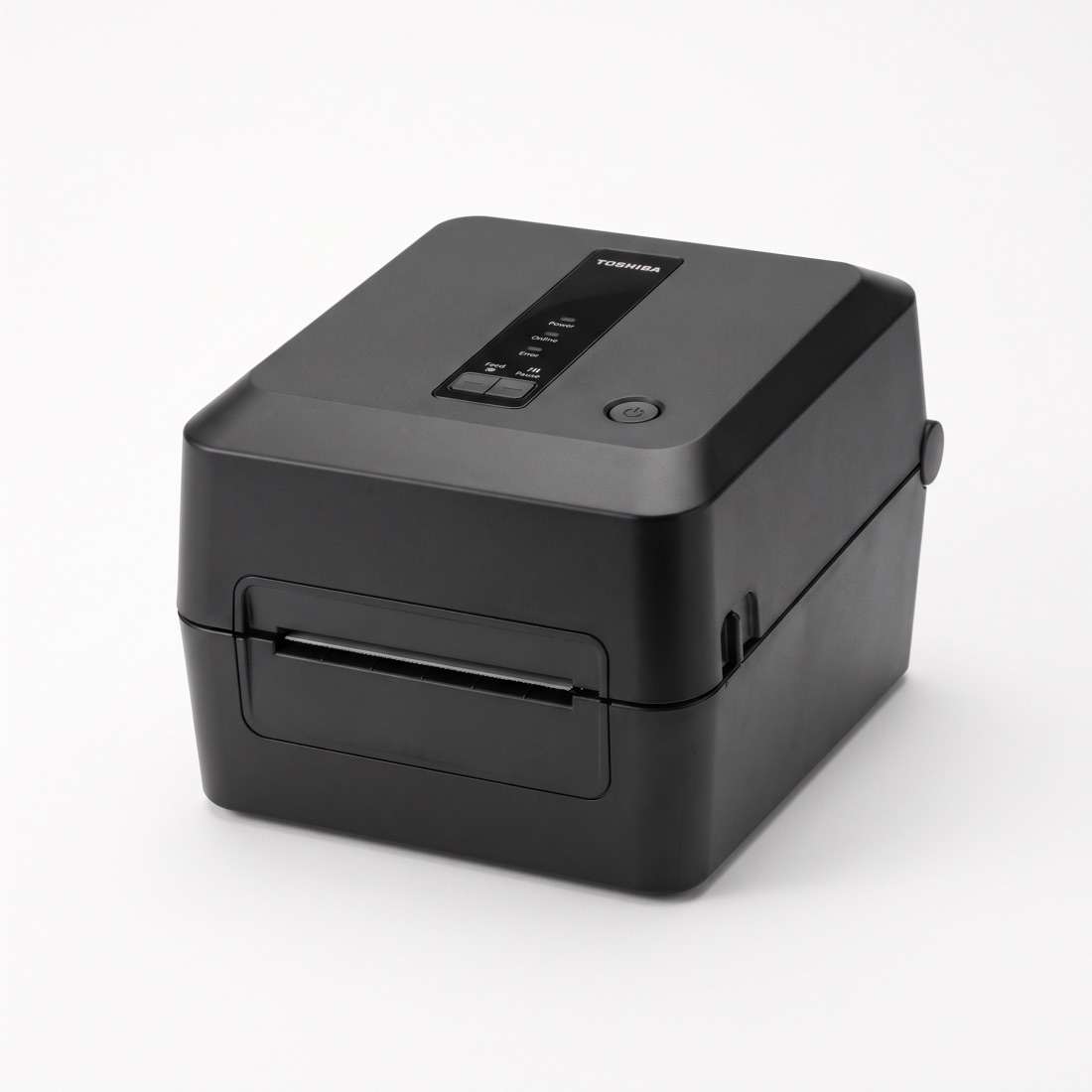
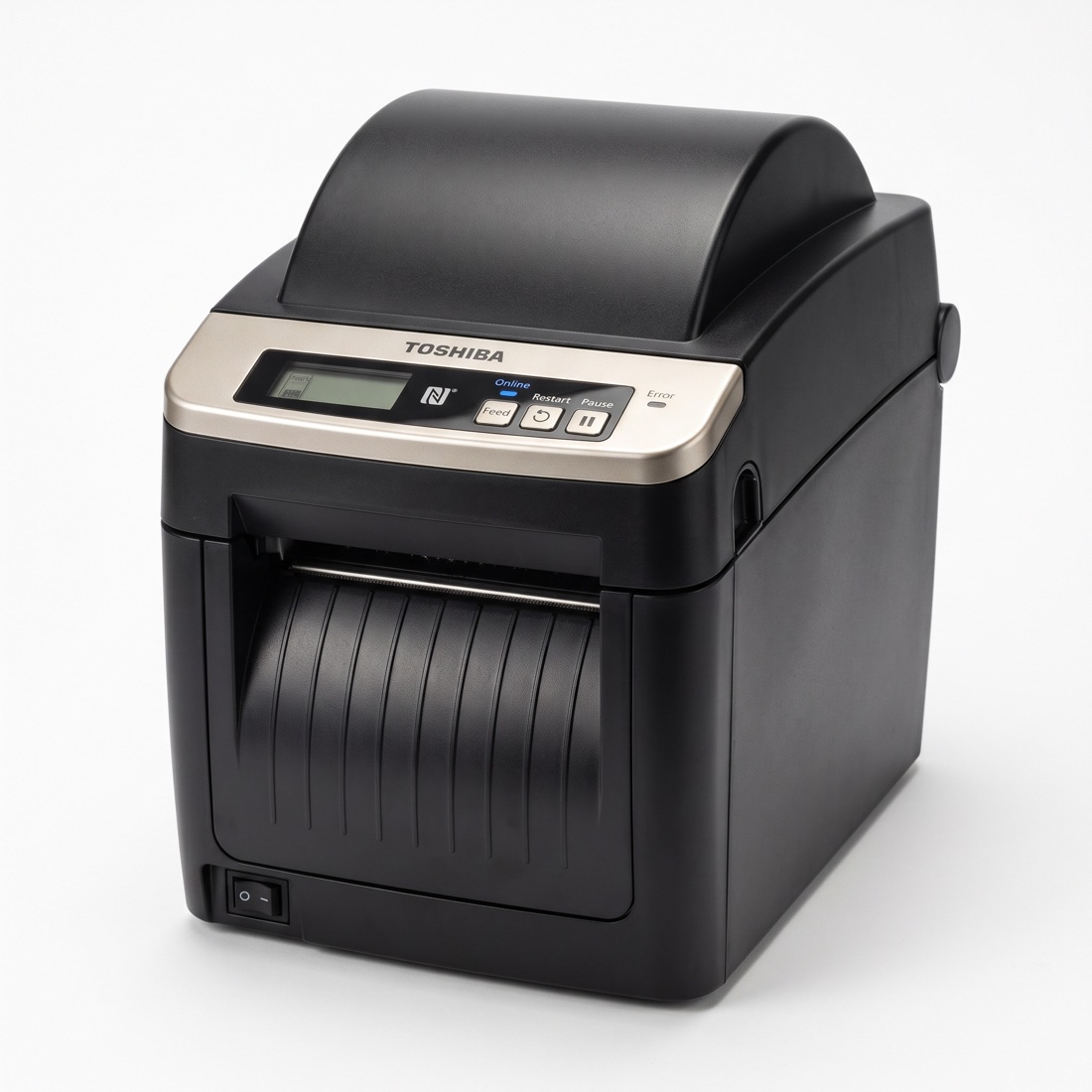
Drawn to one scale.
Labels: Labels from 25 x 25 mm to 116 x 200 mm, on backing paper 120 mm wide on the B-EX4T1 and 114 mm wide on the B-EX4T2, B-EX4T3 and B-EX4D2.
Ribbons: Ribbons are those of the printer underneath: up to 112 mm wide on a 25.4 mm core, up to 800 m long on the B-EX4T1 and 600 m on the B-EX4T2.
See , , or start from what the label must survive in the .
Specification
The base model. Options change some of these figures.
Application
- Methods
- Direct tamp and tamp blow, on stationary or moving cartons and products
- Rate
- Up to 30 labels a minute
- Label size
- 25 x 25 mm to 116 x 200 mm; further sizes on request
- Product speed
- Up to 20 m/min
- Working modes
- Print and apply; print and wait up or down, then apply
- Piston
- 25.4 mm shaft with adjustable up and down speed; stroke up to 400 mm, 250 mm usable; automatic height detection for cartons and products of varying height
- Direction
- From the top, bottom or sides, at any rotation angle
Printing
- Printers
- B-EX4D2, B-EX4T1, B-EX4T2 and B-EX4T3; version 2.1 of the range brochure also lists the BX410T
- Print width
- Up to 104 mm
- Methods
- B-EX4T1, B-EX4T2 and B-EX4T3: thermal transfer and direct thermal; B-EX4D2: direct thermal
- Print speed
- B-EX4T1: 355 mm/s; B-EX4T2: 304 mm/s; B-EX4T3: 152 mm/s; B-EX4D2: 304 mm/s
- Resolution
- B-EX4T1: 203 or 305 dpi; B-EX4T2: 203, 305 or 600 dpi; B-EX4T3: 600 dpi; B-EX4D2: 203 dpi
Labels
- Backing paper width
- B-EX4T1: 120 mm; B-EX4T2, B-EX4T3 and B-EX4D2: 114 mm
- Alignment
- B-EX4T1 and B-EX4T3: centre; B-EX4T2 and B-EX4D2: left
- Rewinder
- External rewinder 200 mm, with an inner core of 76 mm
Connections
- Signals
- In: print, apply, inhibition, test button; out: ready, error (status light), working
- Secondary signals
- Perimeter; presence of hand
Unit
- Air supply
- 4 to 6 bar, 8 mm tube diameter, with an internal air filter; pressure regulator limited to 6 bar
- Fixing
- 50 mm tube diameter
- Size
- 365 x 585 x 705 mm, width by depth by height
- Safety
- Pressure sensor; perimeter signal for an instant stop; piston stays up without air
Options
Peel and present, internal rewinder A peel and present module with an internal rewinder on the printer, which the APLEX4 requires.
Light status indicator An optional status light for the ready, error and working signals.
Hand presence sensor A hand presence sensor for the presence of hand signal.
Support column A support column, with column adjusters.
I/O interface An I/O interface, listed in the range brochure.
Label pad A label pad, listed in the range brochure.
Vacuum sensor A vacuum sensor, listed in the range brochure.
Proximity sensor A proximity sensor, listed in the range brochure.
Drivers and documents
- From Toshiba: the drivers, firmware and user guide are on Toshiba's page for the APLEX4.
- Set up as a fleet: BCP Setting Tool.
- From label software: through Toshiba's driver, see Software licences.
Printheads and wear parts
We supply printheads and wear parts for the printers we sell, the printer maker's own and compatible ones. Send us the model and, if you have it, the serial number at [email protected], and we name the part.
What wears, and what shortens its life: 5.5 Printheads and wear parts.
Status
The APLEX4 is current: Toshiba has announced no end of sale.
Older models and their successors are on 5.6 Discontinued models.
Around the printer
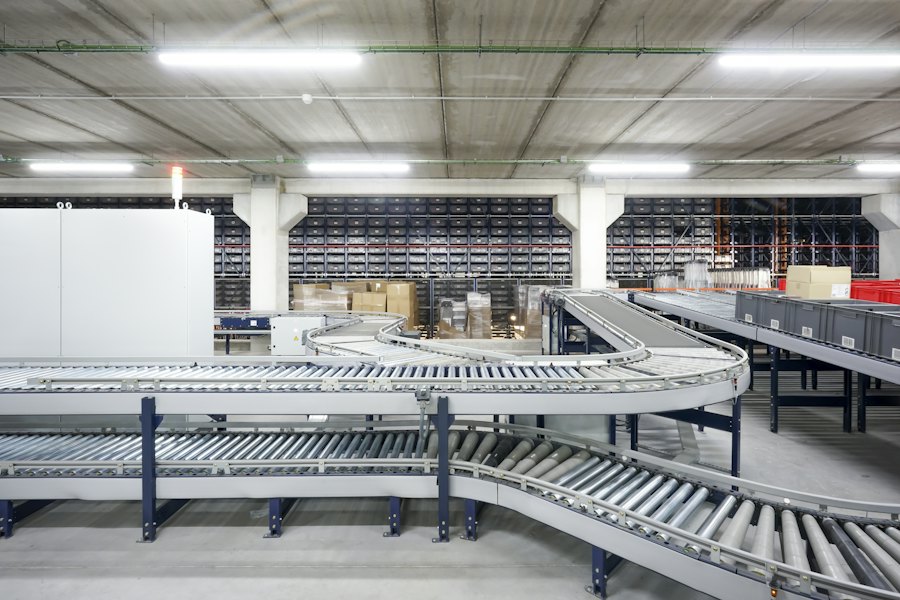
Installation: installed and commissioned by us, see 8.3 Installation. Outside Switzerland, each visit is quoted.
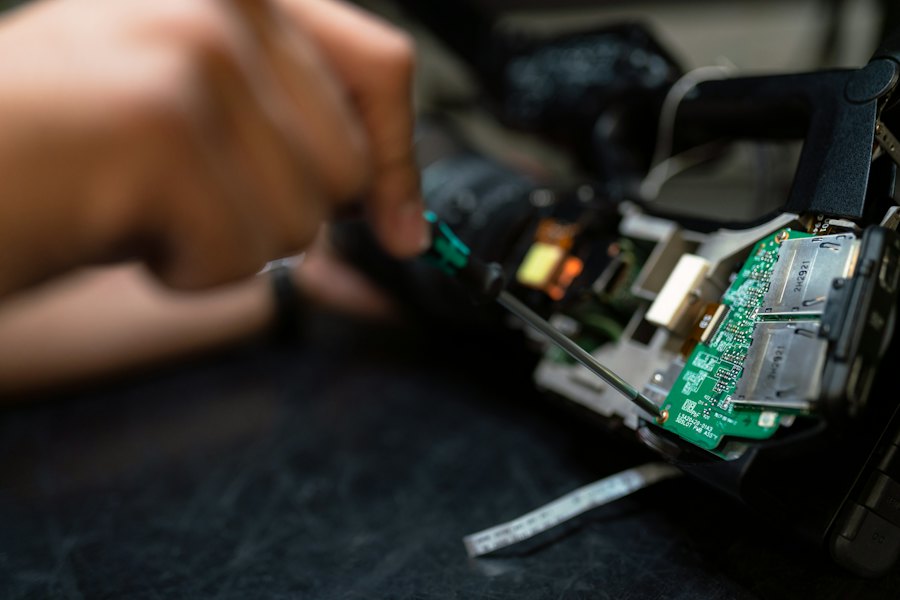
Repair: in our workshop near Zurich, see 8.1 Repair and RMA.

Labels and ribbons: from us too, chosen by what the label must survive, see the .
For the APLEX4 on its own or with its installation, labels and ribbons, request a quote.
Last checked: 5 November 2026.
Preparing a validation, an inspection or a change to your labels?
The first engagement is free: a half-day review of your current label print chain, ending in a written list of gaps.