
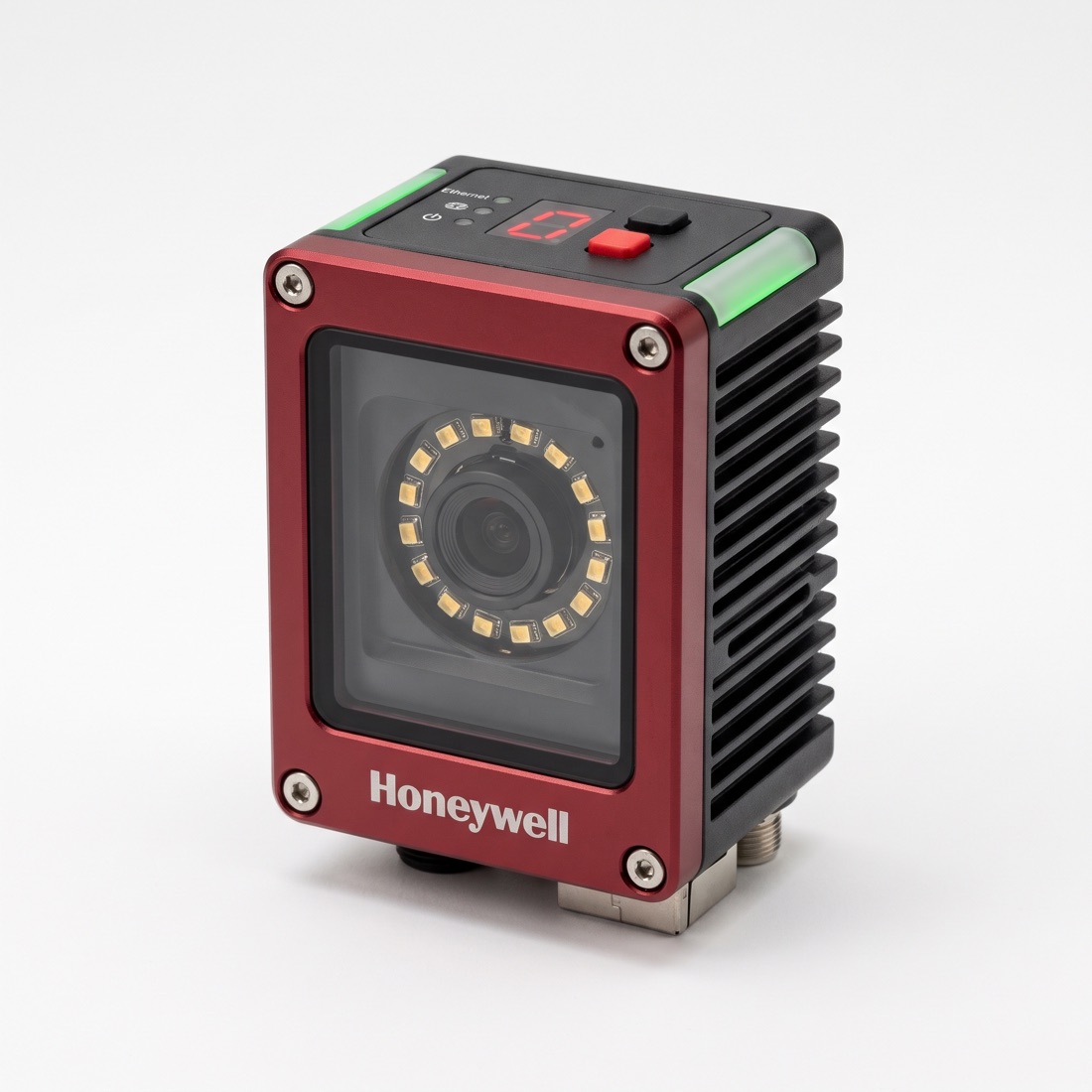
Honeywell HF811
A fixed-mount 2D industrial scanner with a 2 MP sensor that reads direct part marks, rated IP65, with RS-232, RS-485, TCP/IP and three fieldbus protocols.
sensor resolution
sealing rating
weight
fieldbus: PROFINET, EtherNet/IP, Modbus TCP
Specification
The base model. Options change some of these figures.
Reading
- Imager
- Area image, 2 MP (the HF810 has 0.5 MP); liquid lens
- Field of view
- Horizontal 20 to 39°, vertical 11 to 22° (narrow and wide)
Codes
- Standard 1D, PDF and 2D codes (QR, Data Matrix, MaxiCode, Aztec); direct part marks (DPM) with a dedicated algorithm
Connections
- Communication
- RS-232, RS-485, TCP/IP; fieldbus protocols PROFINET, EtherNet/IP and Modbus TCP
- I/O
- Network-ready, with I/O for external triggers and auxiliary lighting
- Power
- 10 to 26.5 V, M12 connector
Unit
- Size
- 70 x 55 x 45 mm, height by width by depth
- Weight
- 180 g
Environment
- Operating
- 0 to 50 °C; 5 to 95% humidity, non-condensing
- Storage
- −20 to 70 °C
- Protection
- IP65
Drivers and documents
- From Honeywell: the software, manuals and documents are on Honeywell's page for the HF811.
- Set up as a fleet: DataMax Plus configuration tool.
- Into your systems: how a scan reaches your ERP or warehouse system is on 3.5 Barcode and data capture.
Status
The HF811 is current: Honeywell has announced no end of sale.
Older models and their successors are on 5.6 Discontinued models.
Around the device
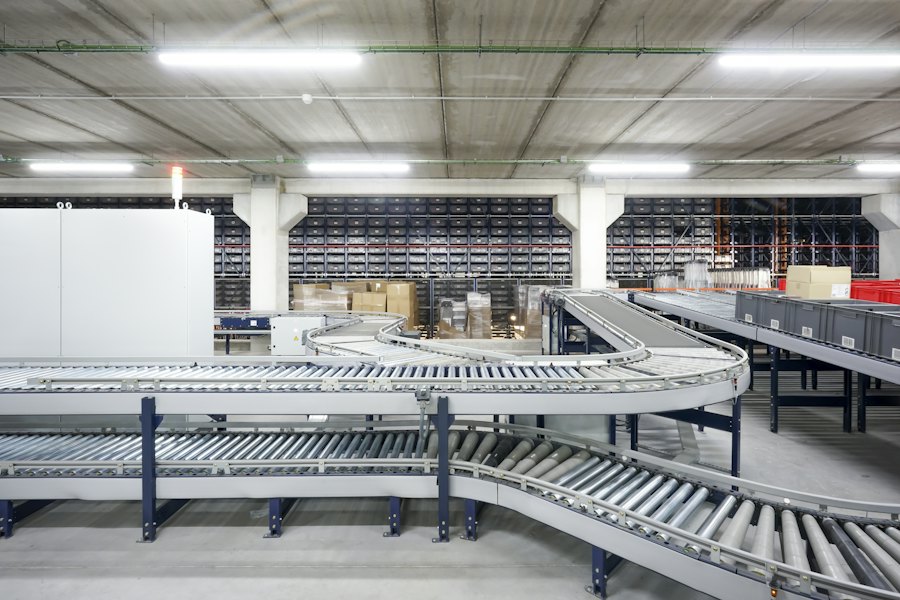
Set-up: we set up the device and the data it sends, see 3.5 Barcode and data capture. Outside Switzerland, each visit is quoted.
Remote support: a fault in the connection to your system can be fixed without anybody travelling, see 8.5 Remote support.
Choosing one: what to compare between scanners and mobile computers is on 5.3 Scanners and mobile computers.
For the HF811 on its own or with its set-up and the connection to your systems, request a quote.
Last checked: 5 November 2026.
Preparing a validation, an inspection or a change to your labels?
The first engagement is free: a half-day review of your current label print chain, ending in a written list of gaps.